Skin care
Hair Removal for Sensitive Skin: A Gentle, Honest Guide
Skin that goes red at the sight of a razor? Here is how to choose a gentler hair removal method, patch test like you mean it, and spot the signs that mean stop.
By Meeown TeamPublished Updated 7 min read

The best hair removal for sensitive skin is the one that skips heat, friction and pulling, goes on clean dry skin, and has passed a 24-hour patch test on you. For most reactive skin, that means a gentle no-strip paste or a sharp razor with care, never a rushed hot wax the night before an event.
Who this is for: You get red, itchy or bumpy after hair removal. Razors leave a rash, hot wax leaves welts, and you are tired of guessing. This guide is for healthy but easily irritated skin. If you have eczema, psoriasis, an infection or a skin condition you are being treated for, talk to a doctor or dermatologist first.
Sensitive is not the same as allergic
This is the bit most guides skip. Sensitive skin reacts to friction, heat, fragrance or being handled roughly. It goes pink, stings a little, then settles. Allergic skin reacts to a specific ingredient, every time, and the reaction can get worse with each exposure.
Why it matters: a "gentle" product can still be the wrong product if you are allergic to something in it. No label can promise that a product suits everyone. Only a patch test on your own skin can tell you.
So read the ingredient list. Every Meeown pouch lists everything inside it, and the full lists sit on each product page. If you already know you react to something, check before you buy, not after.
Why hair removal irritates sensitive skin
Most irritation after hair removal comes from a handful of culprits:
- Heat. Hot wax that is a little too hot can leave red patches or worse on thin skin.
- Pulling. Ripping hair out from the root stresses the follicle. Bumps and redness often follow.
- Friction. A dull razor dragged over dry skin scrapes off more than hair.
- Leaving things on too long. Creams and pastes have timings for a reason.
- What you do after. Deodorant, perfume, tight jeans and sun on freshly treated skin all pile on.
You cannot change your skin type. You can remove most of these triggers.
Hair removal methods ranked for sensitive skin
Here is how the common at-home and salon methods stack up when your skin is the fussy type. This is a general guide, not a promise. Your skin gets the final vote.
| Method | Heat | Pulling | Main risk for sensitive skin | Gentle-skin tip |
|---|---|---|---|---|
| Razor | No | No | Razor burn, nicks, itchy regrowth | New blade, shave with the grain, never dry |
| Hot or strip wax | Often | Yes | Redness, bumps, burns if too hot | Leave it to a careful professional |
| Threading | No | Yes | Redness on larger areas | Best kept for small areas |
| Hair removal cream | No | No | Stinging if left on too long | Patch test, set a timer |
| Meeown powder wax mask | No | No | Tingling if left on too long or used on broken skin | Patch test, thin layer, timer on |
A quick word on how powder wax works, because honesty matters here. The paste contains calcium thioglycolate and calcium hydroxide. These soften the hair at the surface so it rinses away when you wash off the mask. Nothing is pulled from the root. That is exactly why there is no sting, and also why it needs the same respect you would give any hair removal product: patch test, timer, and clean skin.
The best wax for sensitive skin: what to look for
If you are shopping for the best wax for sensitive skin, look past the word "gentle" on the front and check these instead:
- No heat needed. Nothing to melt means nothing to burn you.
- No strips or pulling. Less stress on the follicle, less redness.
- Calming extras. Ingredients like turmeric, licorice and moringa are traditional skin soothers.
- A clear maximum time. Good products tell you exactly how long, and exactly when to stop.
- A full ingredient list. If a brand hides it, walk away.
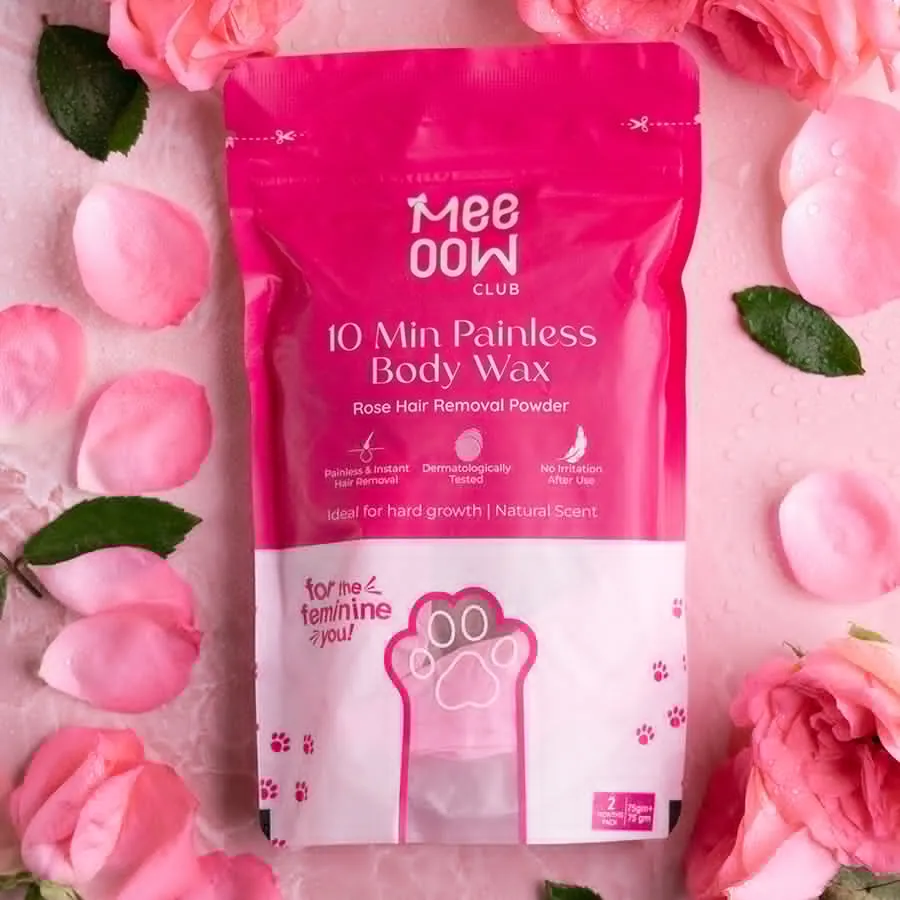
Our Herbal Body Wax was built for this brief. It is the gentlest formula we make, with moringa, turmeric, tagar (valerian) and licorice in a green, ubtan-scented paste. It is for the underarms and the outer edge of the intimate area only. For arms and legs, Rose Body Wax has rose powder, rose clay and licorice and is the calmer of our two body scents.
How to do a patch test for hair removal
Do this before the first use of any new product, and again for every new scent. It takes two minutes of effort and one day of patience.
- Pick a coin-sized spot on your inner arm. Clean and dry.
- Mix a tiny amount of paste and apply it the way you would for real.
- Leave it on for the same time you plan to use: up to 10 minutes for Chocolate and Herbal.
- Rinse with lukewarm water and pat dry.
- Wait 24 hours. Do not put anything else on that spot.
- Check it. No redness, itching, swelling or bumps? You are good to go.
If the spot is red, itchy or blotchy the next day, do not use the product. Simple as that. If a patch-test reaction is strong or spreads, see a doctor.
Sensitive skin body wax for delicate areas: the extra-careful routine
The intimate area is where sensitive skin complains the loudest. Thin skin, friction from clothes, and in Karachi or Lahore summers, plenty of sweat. Here is the routine we recommend for a sensitive skin body wax at home:
- Wait a few days after shaving. Freshly shaved skin is already irritated. Give it time.
- Exfoliate gently the day before. A soft scrub, not a rough loofah.
- Start with clean, dry skin. No oils, lotions or powders on the area.
- Thin layer, outer edge of the intimate area only. Never on inner, mucous or broken skin.
- Timer on, 8 to 10 minutes. Never past 10.
- Rinse with lukewarm water. Rub gently with the scrubber from the pouch. Pat dry.
- Loose cotton, then leave it alone. No deodorant, perfume or tight clothes for 24 hours.
There is a full walk-through in our guide to body wax at home, and the general steps are on how to use.
Hair removal without irritation: the aftercare that actually helps
Getting the hair off is half the job. Most next-day redness is decided in the hours after. Your checklist:
- Rinse with cool water at the end to settle the skin.
- Pat dry. Rubbing with a towel is friction you do not need.
- A thin layer of plain aloe gel or a fragrance-free moisturiser.
- No sun on treated skin for 24 hours. Afternoon errands can wait.
- No perfume, scented lotion or deodorant on the area for 24 hours.
- Loose cotton clothes. Save the fitted outfit for tomorrow.
- Skip the gym and hot showers for the rest of the day.
If small bumps still appear, our guide to bumps after waxing covers what to do next. And if prep is where you usually go wrong, read how to prepare for waxing.
Mild tingle or real reaction? Know the difference
A mild warmth or tingle while a hair removal paste works can be normal. Sharp stinging or burning is not. If you feel it, rinse the paste off straight away with plenty of lukewarm water. Do not wait for the timer.
Stop using the product and see a doctor if you notice:
- Redness that is still there or getting worse after 48 hours
- Blistering, swelling, oozing or broken skin
- Itchy hives or a rash that spreads beyond the area
- Bumps that turn painful, hot or filled with pus
Also check with your doctor before trying a new hair removal product if you are pregnant, or if you use prescription skincare such as retinoids or acne treatments, which can make skin more reactive.
Your sensitive-skin cheat sheet
- Patch test every new product and every new scent, 24 hours ahead.
- No heat, no pulling, no friction where you can avoid it.
- Never on broken, sunburnt, irritated or freshly shaved skin.
- Use the shortest time that works. Never go over the limit.
- Treat the next 24 hours as part of the routine.
- Rinse straight away if it stings sharply.
If your skin has been through enough razors and wax strips, our Herbal Body Wax is a calm place to start. Rs 1,150 for a 100g pouch, Cash on Delivery anywhere in Pakistan, and plain, discreet packaging. Patch test first, then see how your skin feels. You can browse every scent in the shop.
Questions, answered
What is the best hair removal method for sensitive skin?
The one that avoids heat, pulling and friction, and that has passed a 24-hour patch test on your own skin. For many women that is a gentle no-strip paste or careful shaving with a fresh blade. Avoid rushed hot waxing on reactive areas.
Is Herbal Body Wax safe for sensitive skin?
It is the gentlest formula Meeown makes, with moringa, turmeric, tagar and licorice. But sensitive is not the same as allergic, so no product can suit everyone. Patch test on your inner arm 24 hours before, and use it only on the underarms and the outer edge of the intimate area.
Is a tingling feeling normal during hair removal?
A mild warmth or tingle can be normal while a hair removal paste works. Sharp stinging or burning is not. If you feel that, rinse the paste off straight away with plenty of lukewarm water and do not reapply.
Can I use hair removal products if I have eczema?
Check with a doctor or dermatologist first. Never use any hair removal product on skin that is broken, flaring, cracked or being treated for a condition. The same goes for psoriasis, infections or any rash you are unsure about.
How long after shaving can I use a hair removal paste?
Give your skin a few days to settle after shaving. Freshly shaved skin is often slightly irritated, and the hair also needs to be a few millimetres long for the paste to work well.

Written by
Meeown Team
Written by the women behind Meeown in Lahore, who make, test and use our powder wax masks every month. We write what we would tell a friend: practical, honest, no scare tactics. We are not doctors, so for any skin condition we will always tell you to see one.
Questions? Email support@meeown.pk or DM @meeownofficial.